Community Engagement
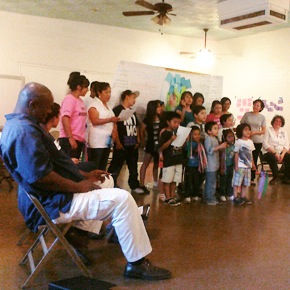 Without question collaboration is hard. However, gaining momentum towards significant breakthroughs is nearly impossible without collaborative alignment. Sustainable breakthroughs are what makes the tough work of community engagement so worthwhile.
SLHI’s nearly two decades of work have clarified our dedication to engagement and advocacy as central to making the big changes possible, and FY2012 saw the establishment and growth of several notable engagement efforts:
Grassroots Capacity Building – SLHI brought nationally recognized resources to Arizona to assist in developing and strengthening local community organizations’ connections to change-enabling power. Using a cross-culturally proven education methodology, trainers focused on developing new leaders, and collaboration to overcome racial, economic and gender inequities that contribute to community health disparities.
Statewide Advocacy – SLHI provided direct technical assistance and working funds to the Saving Arizona’s Future Coalition, a broad and dynamic group of nearly 20 statewide health and human services advocacy and service organizations with the shared goal of more effective state-level advocacy. SLHI’s work focuses on five areas: (1) messaging and communications capabilities, (2) network building, (3) leadership development, (4) identification and development of health care champions and (5) production and dissemination of health policy insights for inclusion in state policy leadership dialog.
Giving Voice to Health Issues for Under-Represented Populations – SLHI collaborated with a number of organizations in helping citizens exercise their right to vote so that their health care needs can be given due consideration by elected policy makers.
Cross Sector Advocacy and Collective Civic Leadership – SLHI joined the Flinn Brown Leadership Academy, Arizona Town Hall, AmeriCorps, Unlimited Potential and others in a Community of Practice devoted to the complex work of social and system change. Short-term, the group engaged more broadly with diverse populations and tapped into multiple levels of leadership to more clearly articulate questions and brainstorm their answers. As the group gained momentum, it has begun the work of promoting and supporting effective implementation of social and system change efforts at the local level.
Without connection, it’s not clear where – or if – we belong. Once we belong, the routes to a healthier quality of life begin to present themselves. That’s when the work of collaboration pays great dividends toward a stronger, more sustainable future.