Healthy Eating, Active Living
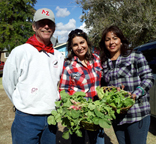 The growing obesity epidemic among adults and children is a multi-faceted challenge. Over the past three years SLHI has become increasingly involved with partners in addressing it. Healthy Eating, Active Living reflects a coalescing of this work in the following set of strategies:
- Promoting healthy community design.
- Supporting community-based efforts that promote healthy eating and active living.
- Improving availability of health foods and consumption of fresh fruits and vegetables.
- Improving the built environment of neighborhoods.
In FY2012 SLHI has:
- Worked with the Livable Communities Coalition (LCC) to promote inclusion of health community design in all General Plans in the Phoenix metro area.
- Continued support for “Making Sustainable Communities Happen,” in partnership with LISC/Phoenix and the Stardust Center for Affordable Homes and the Family.
- Joined the city of Phoenix in Reinvent Phoenix, a $2.9 million grant from HUD that promotes transit-oriented development along the light rail line. Along with other core community partners, SLHI will be the lead organization conducting Health Impact Assessments (HIA) for the five districts along the light rail corridor in the Phoenix boundaries.
- Continued to support the Sustainable Communities Collaboration. Their work in transit-oriented development has been integral in the planning of Reinvent Phoenix.
- Continued work on Maryvale on the Move, with support from the Robert Wood Johnson Foundation.
- Analyzed data from the Arizona Health Survey to inform strategies and approaches. Two publications focused on healthy eating, active living were released.
- Continued support of community gardens and provided technical assistance in the establishment of new gardens.
- Convened South Phoenix partners in a series of community design workshops, “charrettes”, for the purpose of providing community members with the opportunity to identify barriers and find solutions for building a healthy community.
Decades of change in built environment, personal behaviors, food production and food consumption are considerable potential barriers to a healthier future. Perhaps just as considerable is our collective ability to see where we want to go while staring into the reality of where we are. Work at the neighborhood, community, municipal and state level will help create opportunities for those who do.